How to Plan a Medical Trip to China: Treatment, Recovery & Travel (2026)

You’ve found a hospital in China that may offer the treatment you need. The medical team looks experienced, the travel distance seems manageable, and the cost may be more affordable than other options you’ve considered.
But before booking a flight, there are still some important questions:
Will the hospital accept an international patient? Which department should you contact? Can you send your medical records in advance? How long should you stay in China? And if your recovery goes well, can you travel before returning home?
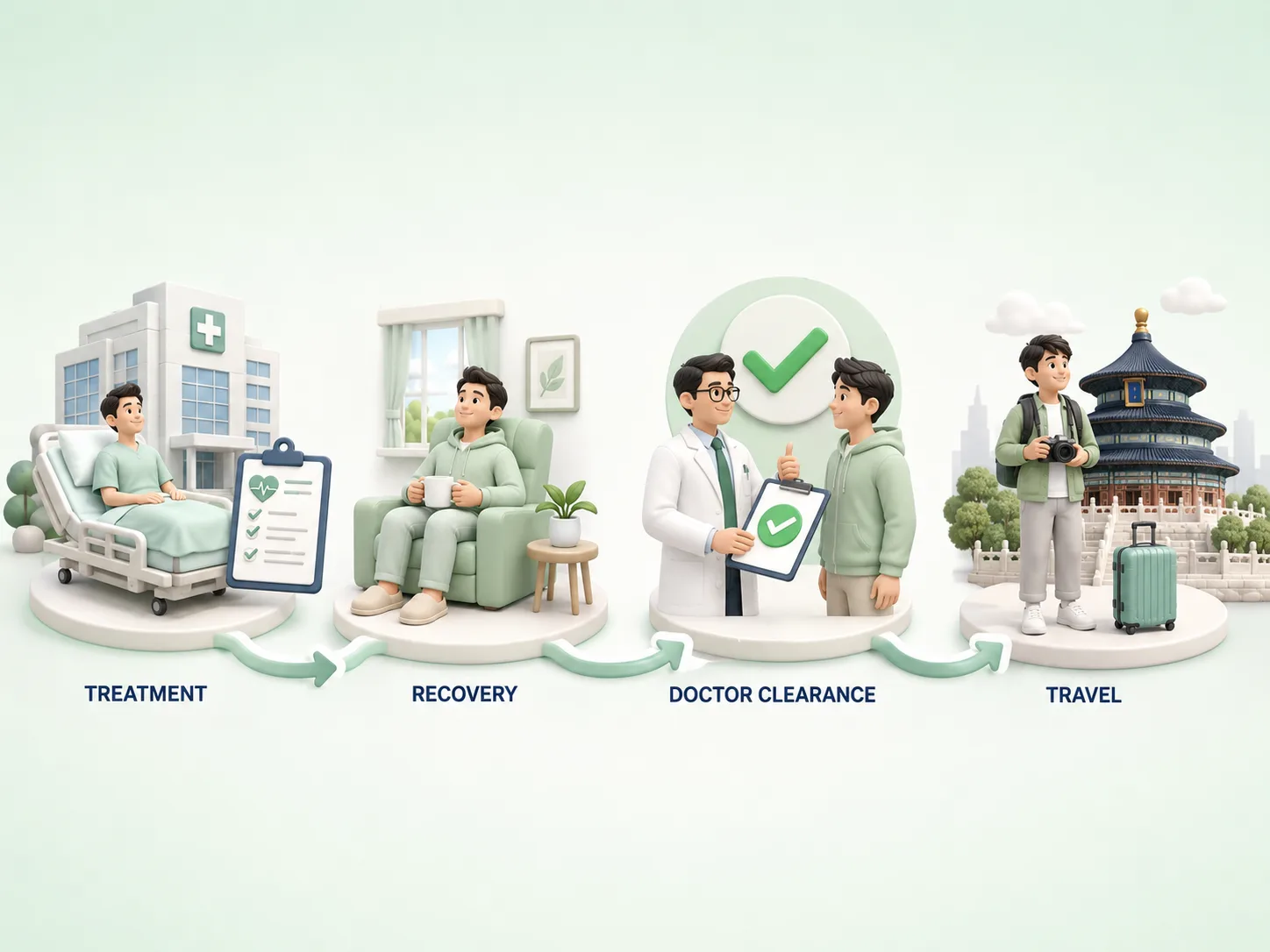
A medical trip to China should follow a clear order:
Confirm the hospital first, receive treatment second, recover properly, and travel only when your doctor says it’s safe.
This guide walks you through that process.
Medical information notice: This guide explains how international patients can plan access to healthcare services in China. It does not provide a diagnosis or replace advice from a qualified medical professional. In a serious or life-threatening emergency in China, call 120 or seek emergency medical care immediately.
01 Confirm That the Hospital Can Treat Your Condition
Don’t choose a hospital only because it is famous or located in a major city.
A large Chinese hospital may be highly regarded overall but may not have the department, treatment program or international patient service you need.
Before making travel arrangements, confirm:
- the hospital has the correct department for your condition;
- it currently accepts international patients;
- it can review overseas medical records;
- the treatment or examination you need is available;
- interpretation or English-language support can be arranged;
- inpatient care is available if required;
- the hospital can provide an estimated treatment schedule.
China has several types of medical institutions that may treat international patients:
- general departments in public hospitals;
- international or VIP departments inside public hospitals;
- private international hospitals and clinics;
- specialist hospitals focusing on areas such as oncology, cardiology, orthopedics or rehabilitation.
These options differ in appointment access, language support, cost and insurance arrangements. Don’t assume that the most expensive option is automatically the most appropriate one.
02 Send Your Medical Records Before Buying a Flight
If you’re travelling specifically for treatment, the hospital should understand your medical situation before you arrive.
Prepare a concise medical file containing:
- your current diagnosis;
- recent consultation notes;
- laboratory results;
- CT, MRI, X-ray or ultrasound reports;
- original medical images where available;
- surgery and hospitalization records;
- pathology reports;
- a list of current medicines and doses;
- known allergies;
- details of previous treatments;
- a short description of your current symptoms.
English records may be accepted by some international patient departments, but this varies. Ask whether the hospital needs a Chinese translation.
Don’t send only a collection of unexplained images or reports. Include a one-page summary explaining what has happened, what treatment you’ve already received and what you want the Chinese hospital to assess.
If possible, ask the hospital to confirm in writing:
- which department will review your case;
- whether an in-person consultation is recommended;
- whether additional tests may be needed;
- the earliest available appointment;
- how long you may need to remain in China;
- whether a companion should travel with you.
A preliminary review is not a guaranteed diagnosis or treatment plan. The medical team may change its recommendation after examining you in person.
03 Contact the International Patient Service
Many hospital websites and appointment systems in China are designed primarily for domestic patients. They may ask for a Chinese ID number, Chinese mobile number or local payment account.
If the online form doesn’t accept your passport information, don’t repeatedly enter incorrect information. Contact one of the following:
- the hospital’s international medical department;
- its international patient office;
- the foreign patient service center;
- the hospital’s official English-language hotline;
- the general service desk, which can transfer your request.
Your message should contain:
- Your full name and nationality.
- Your passport name as it appears on the document.
- Your current diagnosis.
- The department or treatment you’re looking for.
- Your preferred travel dates.
- Whether you need an interpreter.
- Whether you will use insurance or pay yourself.
- A list of the medical files attached.
Ask for the hospital’s official name and complete Chinese address as well. Large Chinese cities sometimes have several hospitals with similar English names, and one hospital may operate multiple campuses.
04 Ask for an Estimated Schedule and Cost
A hospital may not be able to give you a final price before completing its own examination. However, it may be able to provide an initial estimate based on your submitted records.
Ask which items are included:
- initial consultation;
- laboratory and imaging tests;
- procedure or surgery;
- medicines;
- hospital room;
- nursing care;
- medical supplies;
- rehabilitation;
- interpretation;
- follow-up visits.
Also ask whether an inpatient deposit is required.
Payment methods vary by hospital. Beijing’s current foreign-patient medical guide lists RMB cash, major international credit cards, UnionPay, Alipay and WeChat Pay as available options for international patients, but this should not be treated as a guarantee for every hospital in China. Confirm payment directly with the institution you plan to visit. Beijing Medical Guide for Foreigners
If you intend to use international insurance, contact both the hospital and insurer. Direct billing usually works only when:
- the hospital has an agreement with the insurer;
- your specific policy is eligible;
- the proposed treatment is covered;
- any required pre-authorization has been approved.
Otherwise, you may need to pay first and submit the documents for reimbursement later.
05 Plan Entry, Accommodation and Local Support
Confirm your immigration requirements before travelling.
Your nationality, purpose of travel and expected length of stay may affect whether you can use a visa-free policy or need to obtain a visa. Don’t assume that a hospital appointment automatically permits a longer stay.
If treatment could continue beyond your permitted stay, ask the hospital and the relevant Chinese embassy, consulate or immigration authority what documentation may be needed.
Book accommodation near the hospital rather than near the city’s main tourist attractions.
You may need to visit the hospital several times for:
- preliminary tests;
- consultations with different departments;
- admission procedures;
- treatment;
- dressing changes;
- laboratory monitoring;
- follow-up appointments.
A hotel that looks close on a city map may still require a long trip during rush hour. Check the travel time to the exact hospital campus.
For surgery, complex treatment or limited mobility, bring a family member or trusted companion. Don’t assume that hospital staff can provide all the non-medical assistance you may need outside the ward.
06 Bring the Right Documents to the Hospital
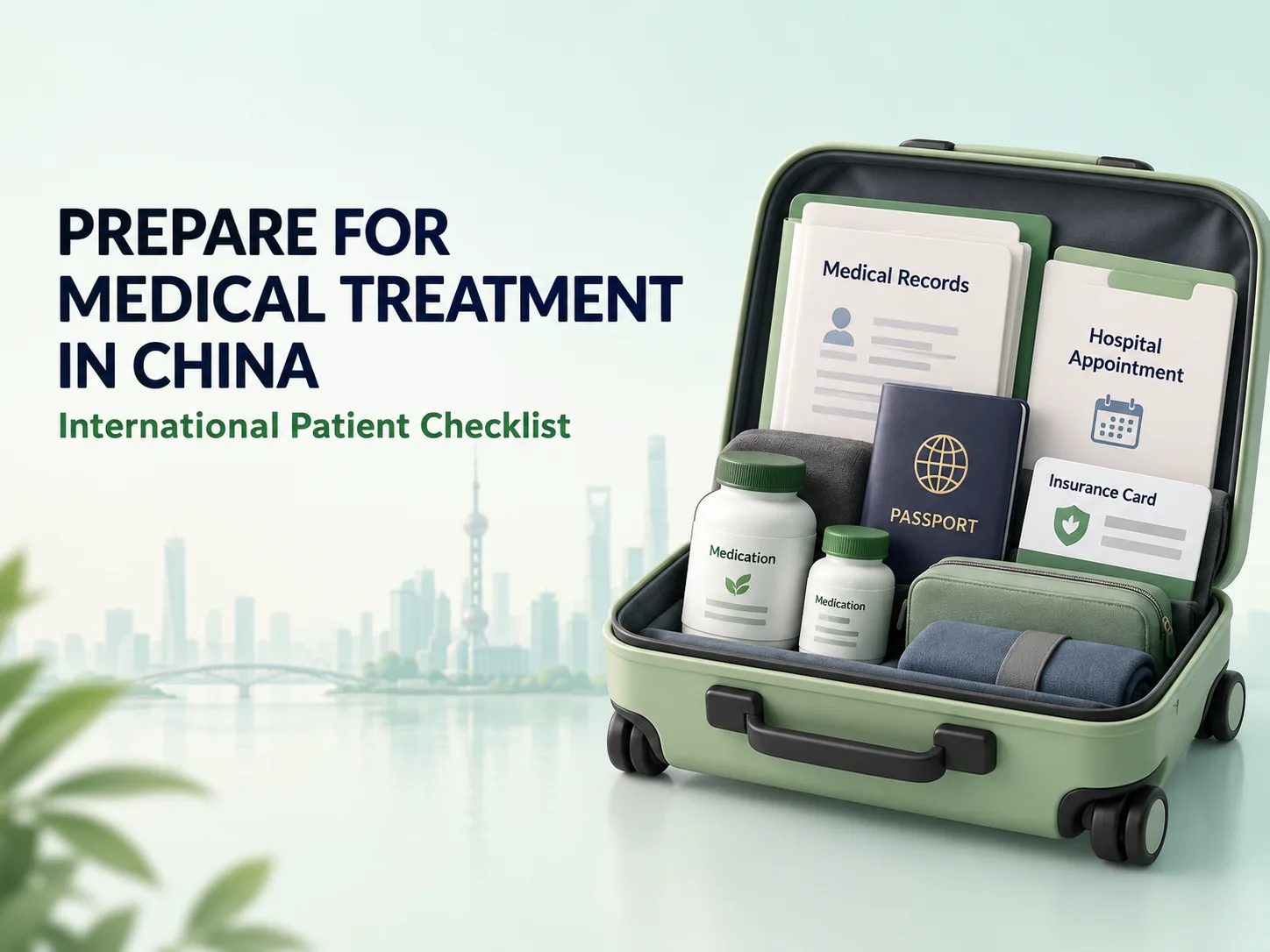
Carry your original passport whenever possible. Hospitals commonly use it to verify your identity and create a patient profile.
Also bring:
- appointment confirmation;
- original and translated medical records;
- medical images;
- current medicines or photographs of the packaging;
- medicine and allergy list;
- insurance card and authorization documents;
- emergency contact details;
- several payment options;
- the Chinese address of your hotel.
Keep digital backups, but don’t rely entirely on your phone. Your battery, internet connection or hospital Wi-Fi may fail when you need the information.
Some hospitals may accept a clear passport copy for parts of the registration process, but requirements differ. Confirm this before leaving the original document at your hotel.
07 Understand the Hospital Process
The exact process varies, but a typical outpatient visit may look like this:
Patient registration → appointment or on-site registration → consultation → payment → tests → results → return consultation → medicine or admission
In China, you may need to pay at several points instead of receiving one final bill at the end.
For example, the doctor may order a blood test or scan. You pay for that test, visit the correct examination area and then return to the doctor when the results are ready.
Shanghai’s official guide for foreign patients explains that a first-time patient may receive a hospital card after registering with a passport. It also describes the usual sequence of consultation, payment, examination and pharmacy collection. How to See a Doctor at a Local Hospital in Shanghai
Before leaving each counter, ask:
- Where do I go next?
- Do I need to pay first?
- When will the result be ready?
- Do I return to the same doctor?
- Do I need another appointment?
08 Treat Recovery as Part of the Medical Trip
Finishing the procedure doesn’t mean the medical part of your trip is over.
Your recovery plan may include:
- staying close to the hospital;
- taking medicine on a fixed schedule;
- wound or dressing care;
- blood tests;
- rehabilitation;
- dietary restrictions;
- limits on walking, lifting or physical activity;
- a follow-up consultation before travelling.
Ask the treating doctor for specific warning signs that require medical attention.
Don’t create a fixed recovery schedule based on another patient’s experience. The correct timeline depends on your diagnosis, treatment and response.
Choose accommodation with practical features such as:
- elevator access;
- a nearby pharmacy;
- simple food options;
- easy taxi or DiDi pickup;
- enough space for a companion;
- flexible booking dates.
09 Travel Only After Medical Clearance
If your recovery is going well, you may be able to visit parts of China before returning home. But tourism comes after treatment and recovery—not before medical clearance.
Ask your doctor:
- whether you can take a high-speed train or flight;
- how long you can sit during travel;
- whether you need compression garments or other precautions;
- how to store and carry your medicine;
- what activity level is safe;
- whether you need another examination before departure.
Start with a light itinerary close to your treatment city.
Avoid:
- high-altitude destinations unless specifically cleared;
- long days of walking;
- changing hotels every night;
- tightly connected flights and trains;
- remote areas far from medical care;
- non-refundable bookings.
Keep your medical records, medicine and hospital contact details with you during the trip.
10 Collect Everything Before Returning Home
Before leaving China, request copies of:
- consultation notes;
- diagnosis certificate;
- laboratory reports;
- medical images;
- operation or procedure report;
- pathology report;
- discharge summary;
- prescription;
- medicine instructions;
- itemized bill;
- official invoice;
- follow-up plan;
- hospital contact information.
Ask which documents can be issued in English. If English versions aren’t available, keep the original Chinese documents and arrange a professional translation.
Confirm how your doctor at home can contact the Chinese hospital if clarification is needed.