Do You Need a Visa for Medical Treatment in China? (2026 Guide)
You’ve received a reply from a hospital in China, and the department is willing to review or assess your case. The next question seems simple:
“Do I need a medical visa for China?”
The answer depends on your nationality, the purpose of your visit, how long the treatment may take and the requirements of the Chinese embassy or visa application center handling your application.
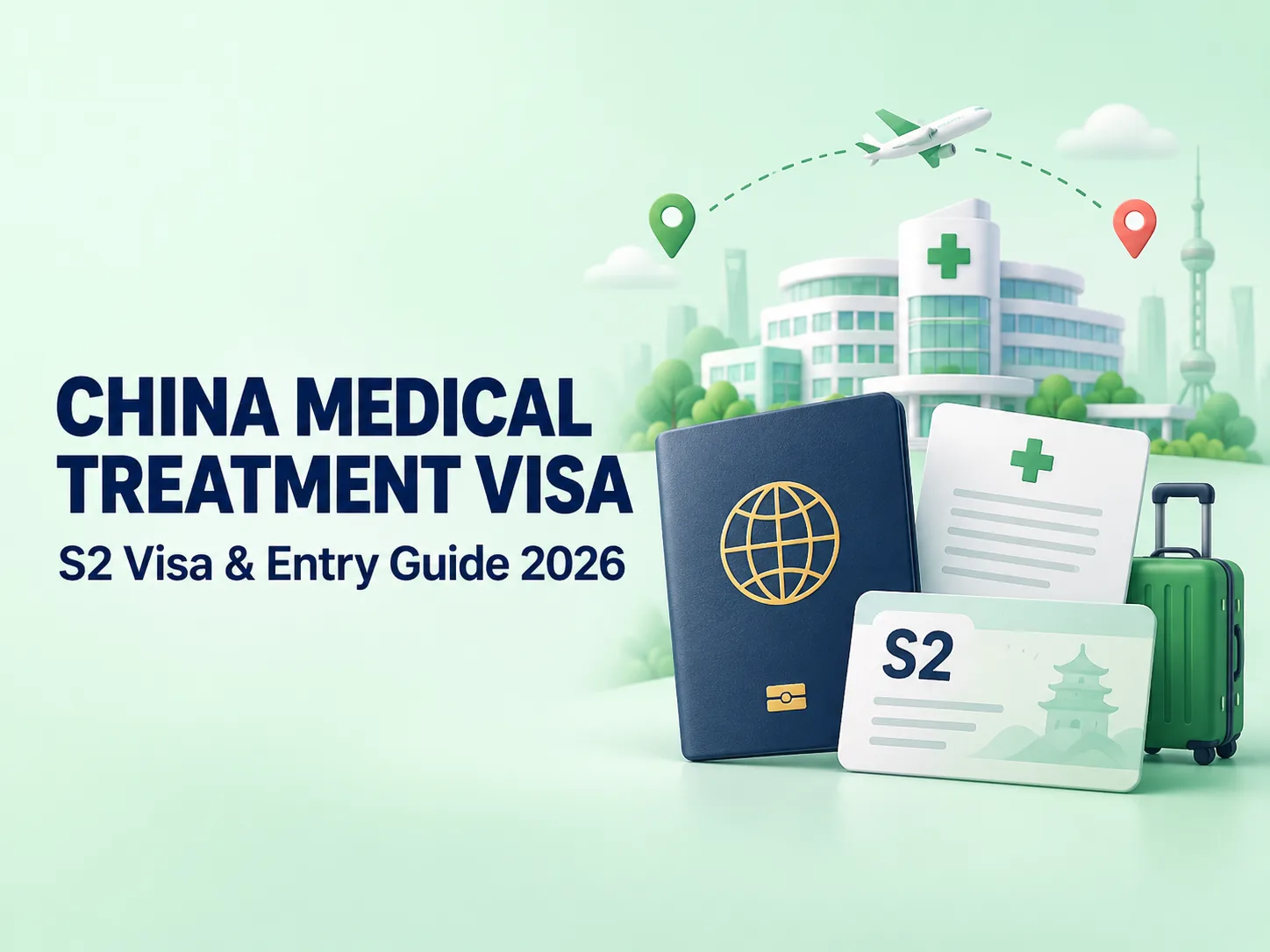
China doesn’t use one universally named visa category called a “medical visa.” In many locations, short-term planned medical treatment is handled under the S2 visa category for private affairs. However, the supporting documents and approval requirements can vary by country and consular office.
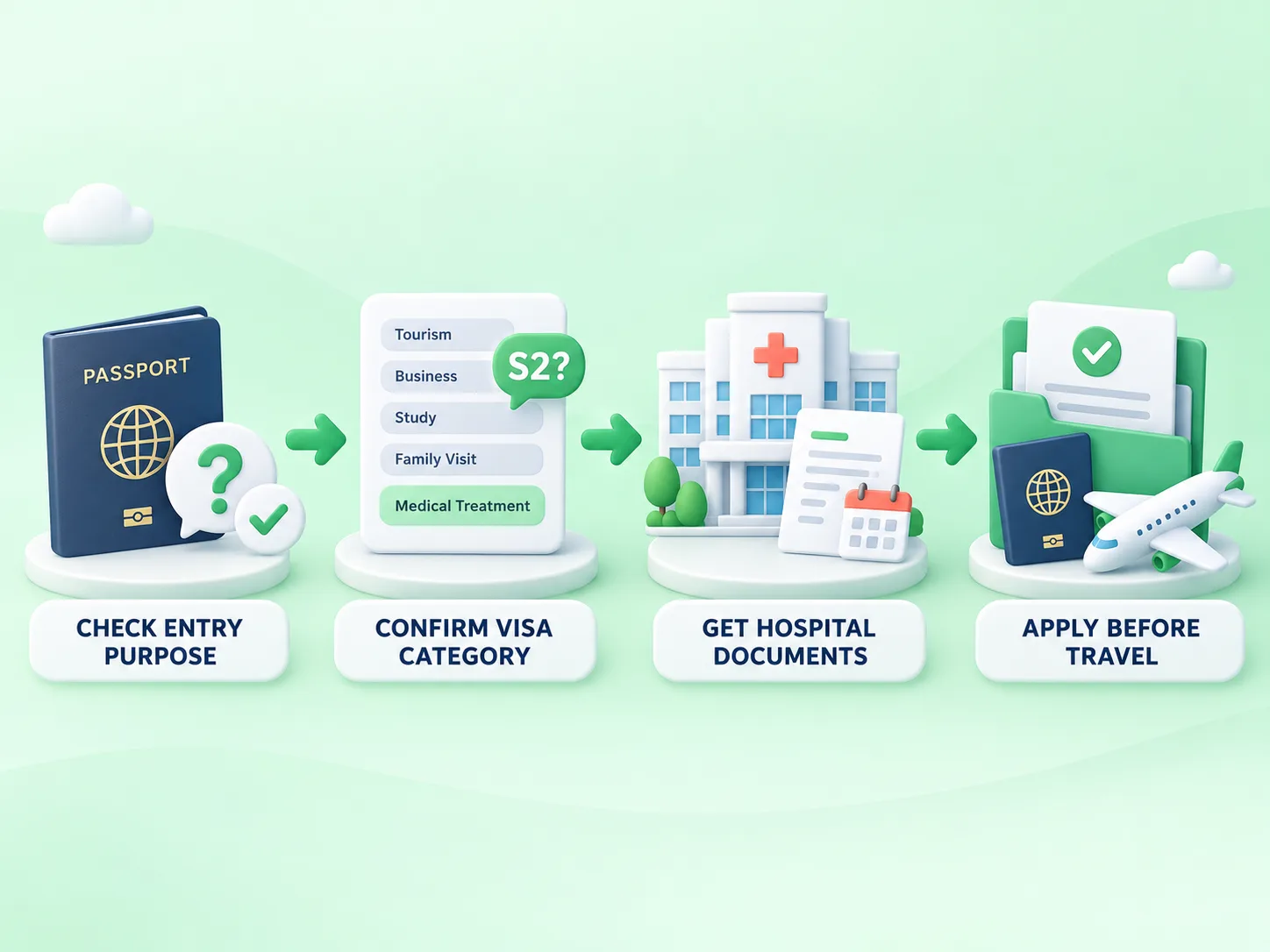
Don’t select a visa category only from a travel blog. Confirm it with the Chinese embassy, consulate or Chinese Visa Application Service Center responsible for your place of residence.
This article provides general travel and visa information, not legal or medical advice. Visa and entry policies can change. Always check the current rules with the responsible Chinese authority before travelling.
Quick Answer
| Situation | What to check |
|---|---|
| Planned treatment for up to 180 days | Ask whether you should apply for an S2 visa for private affairs |
| Nationality currently eligible for visa-free entry | Don’t assume planned medical treatment is included; confirm the permitted purpose |
| Treatment may exceed your permitted stay | Apply for the correct visa before travel and discuss timing with the hospital |
| Accompanying a patient | Ask for the companion document list and hospital supporting letter |
| Using 240-hour visa-free transit | Not a practical substitute for a planned medical-treatment visa |
| Treatment unexpectedly takes longer | Contact the local exit-entry administration before your permitted stay expires |
Is There a Chinese Medical Visa?
“China medical visa” is a useful search phrase, but it isn’t normally the official letter printed as a separate medical category.
The Chinese Visa Application Service Center describes the S2 category as covering certain short-term private matters of no more than 180 days and explicitly gives medical treatment as an example on some official application-center pages.
Several Chinese embassies also publish S2 requirements for patients seeking treatment and accompanying family members.
That doesn’t mean every applicant receives the same checklist.
Depending on where you apply, the consular authority may request:
-
hospital invitation letter;
-
hospitalization confirmation;
-
intended-admission or pre-admission proof;
-
treatment information;
-
expected arrival and departure dates;
-
proof of available funds;
-
accommodation and flight information;
-
proof of relationship for accompanying family members;
-
companion confirmation from the hospital;
-
additional documents or an interview.
Use the official instructions for the country or region where you’re legally applying.
What Is an S2 Visa?
The S2 visa is generally used for short stays of no more than 180 days by eligible family visitors and people entering China for certain private affairs.
Official visa guidance in several locations includes medical treatment within these private affairs.
However, up to 180 days describes the general category. It doesn’t guarantee that every applicant will receive a 180-day stay.
The visa issued to you will show:
-
validity period;
-
number of entries;
-
duration of each stay.
These are different things.
For example, a visa may be valid for entry during a particular period but allow a shorter stay after each entry. Read the actual visa carefully before booking treatment and recovery accommodation.
Can You Enter China Visa-Free for Medical Treatment?
Don’t assume that you can.
China’s current unilateral visa-free arrangements generally permit eligible ordinary-passport holders to enter for purposes such as:
-
business;
-
tourism;
-
visiting family or friends;
-
exchange visits;
-
transit.
Planned medical treatment isn’t consistently listed among these purposes.
Mutual visa-exemption agreements may use different wording, eligibility rules and permitted stays. Policies also vary by passport type.
If the main reason for your trip is planned treatment, contact the Chinese embassy, consulate, visa center or National Immigration Administration hotline before relying on visa-free entry.
Ask this exact question:
I plan to enter China mainly for pre-arranged medical treatment at a Chinese hospital. Does my nationality’s visa-free policy cover this purpose, or should I apply for an S2 visa?
Keep the written answer if one is provided.
Don’t Use Visa-Free Transit as a Treatment Plan
China’s 240-hour visa-free transit policy is designed for eligible travelers transiting through China to a third country or region.
It includes conditions involving:
-
eligible nationality;
-
approved entry port;
-
confirmed onward travel;
-
permitted geographic area;
-
limited duration;
-
actual transit to a third country or region.
A planned course of treatment may change because of tests, admission availability, recovery time or complications. That makes a transit-based stay risky and inflexible.
Don’t build a medical trip around the 240-hour transit policy simply to avoid applying for the appropriate visa.
Get Hospital Documents Before Applying
Contact the hospital before beginning the visa application.
Ask whether it can issue:
-
invitation letter;
-
appointment confirmation;
-
medical record review letter;
-
pre-admission proof;
-
intended hospitalization certificate;
-
estimated treatment period;
-
companion-supporting letter.
The document should ideally include:
-
patient’s full passport name;
-
passport number if required;
-
date of birth;
-
hospital’s official name;
-
department;
-
purpose of visit;
-
expected appointment or admission date;
-
estimated treatment period;
-
hospital contact information;
-
official signature or stamp where applicable.
A simple email saying “we can see you” may not satisfy the consular requirements.
Follow our guide on how to contact and book a Chinese hospital before you travel before requesting visa documents.
Prepare the Visa Application File
The exact checklist depends on the location handling the application, but you may need:
-
valid passport;
-
passport information-page copy;
-
visa application form;
-
compliant passport photograph;
-
proof of legal residence if applying outside your country of citizenship;
-
hospital invitation or admission-related document;
-
medical summary or diagnosis information;
-
financial evidence;
-
travel itinerary;
-
accommodation information;
-
previous Chinese visa copies;
-
companion and relationship documents;
-
other materials requested by the consular officer.
Make sure the name on the hospital documents matches the passport exactly.
If the hospital uses a different English spelling, ask it to correct the document before applying.
Can a Family Member Accompany the Patient?
Potentially, but the companion needs their own lawful entry permission.
Some Chinese embassies publish special requirements for people accompanying a patient, such as:
-
hospital confirmation that a companion is needed;
-
proof of relationship;
-
the patient’s medical or admission documents;
-
financial evidence;
-
limits on the number or relationship of accompanying people.
These rules aren’t identical at every consular office.
Ask the hospital to identify the companion by full passport name in the supporting letter if the responsible visa office requires it.
Don’t assume the patient’s visa automatically covers a spouse, parent or child.
When Should You Apply?
Begin only after the hospital provides sufficient supporting information, but don’t wait until the final days before travel.
Allow time for:
-
collecting medical documents;
-
obtaining hospital letters;
-
translation;
-
online application review;
-
appointment availability;
-
additional-document requests;
-
passport submission and return;
-
flight changes.
Don’t purchase a non-refundable flight only because you have submitted the visa application.
A submitted application isn’t an approved visa.
The Chinese embassy or visa center handling your location should provide the current recommended application timing and processing arrangements.
How to Apply
The process differs by location, but the general route is:
-
Confirm the correct visa category with the responsible Chinese authority.
-
Obtain supporting documents from the hospital.
-
Open the official Chinese embassy, consulate or Visa Application Service Center website.
-
Read the current requirements for your place of application.
-
Complete the online application accurately.
-
Upload or prepare the requested documents.
-
Attend an appointment if required.
-
Provide additional materials if requested.
-
Wait for the decision.
-
Check every detail on the visa after receiving your passport.
Use only official visa websites. Be cautious with agencies that guarantee approval.
A hospital invitation supports the purpose of travel, but it doesn’t guarantee that a visa will be issued.
Check These Three Visa Details
When you receive the visa, check:
Enter Before
This is the deadline for entering China using that visa.
It isn’t automatically the date when you must leave.
Entries
This shows whether the visa permits one, two or multiple entries.
If you plan to leave China during recovery and return for follow-up, check whether another entry is permitted.
Duration of Each Stay
This is the maximum permitted stay after each entry, calculated according to the rules applying to the visa.
Compare it with:
-
pre-treatment tests;
-
expected hospital stay;
-
recovery period;
-
follow-up appointment;
-
medically appropriate flight date;
-
a reasonable schedule buffer.
If the permitted stay appears too short, resolve the issue before travelling.
Bring the Supporting Documents to China
A visa doesn’t remove the need to explain your trip at the border.
Carry:
-
passport and visa;
-
hospital invitation;
-
appointment confirmation;
-
hospital address and telephone number;
-
department and doctor information;
-
accommodation booking;
-
return or onward itinerary;
-
proof of funds if relevant;
-
companion documentation;
-
insurance details.
Entry permission is decided by Chinese border authorities. A visa allows you to travel to the border and request entry; it doesn’t guarantee admission.
Answer questions truthfully and consistently with your application.
What If Treatment Takes Longer Than Expected?
Don’t wait until the final day of your permitted stay.
The National Immigration Administration states that foreigners applying to extend the duration of stay shown on a visa should apply to the local exit-entry administration of the public security organ seven days before the stay expires and submit the required supporting materials.
You may need:
-
passport;
-
current visa;
-
accommodation registration;
-
hospital diagnosis or treatment certificate;
-
expected treatment period;
-
application form and photograph;
-
other supporting documents requested locally.
An extension isn’t automatic. The authority decides whether the reasons and documents are sufficient.
Patients who entered under a visa-exemption agreement must normally leave before the visa-free stay expires. Official NIA guidance says people facing emergencies or force majeure should apply to the local exit-entry administration before that period expires.
Ask the hospital’s international patient team for help as soon as it becomes clear that treatment or recovery may exceed your permitted stay.
Don’t Overstay While Waiting for Treatment
A delayed operation, unavailable hospital bed or postponed follow-up appointment doesn’t automatically extend your legal stay.
Track the immigration deadline separately from the medical schedule.
Keep these dates visible:
-
last permitted day in China;
-
planned treatment date;
-
expected discharge date;
-
follow-up date;
-
deadline for requesting immigration assistance;
-
scheduled departure date.
If the timeline becomes unsafe, contact the local exit-entry administration and your hospital immediately.
The National Immigration Administration’s 12367 hotline can provide immigration-service information.
Does an Emergency Require a Medical Visa?
If you become ill or injured after entering China legally for another permitted purpose, you can still seek emergency medical help.
Call 120 or go to an emergency department.
This is different from arranging an overseas trip mainly for planned treatment. Don’t use emergency-care access as a substitute for obtaining the correct entry permission for a pre-arranged medical trip.
Chinese Message for the Hospital
我准备申请来中国治疗的签证。请问贵院可以提供邀请函、预约证明或预住院证明吗?
Wǒ zhǔnbèi shēnqǐng lái Zhōngguó zhìliáo de qiānzhèng. Qǐngwèn guìyuàn kěyǐ tígōng yāoqǐnghán, yùyuē zhèngmíng huò yùzhùyuàn zhèngmíng ma?
I’m preparing to apply for a visa for medical treatment in China. Can your hospital provide an invitation letter, appointment confirmation or pre-admission document?
Visa Checklist for Medical Treatment in China
-
Correct visa category confirmed
-
Current requirements checked for your application location
-
Passport validity checked
-
Hospital invitation or admission proof obtained
-
Appointment and department confirmed
-
Financial documents prepared if requested
-
Companion documents prepared
-
Accommodation arranged
-
Intended stay covers treatment and recovery
-
Visa entries checked
-
Supporting documents packed for border inspection
-
Extension plan understood
-
Return flight remains flexible
Official Sources Used
FAQ
What visa do I need for medical treatment in China?
Can I call an S2 visa a medical visa?
Can I enter visa-free and then receive planned treatment?
The permitted purposes under many current visa-free policies don’t expressly list planned medical treatment. Confirm your specific nationality and purpose before travelling.
How long can I stay with an S2 visa?
Does the hospital invitation guarantee the visa?
The invitation or pre-admission proof supports the application, but the consular authority decides whether to issue the visa.