Medical Travel in Chengdu: Hospitals, Recovery & Local Travel

A medical trip to Chengdu can involve an initial consultation, further tests and several follow-up appointments. Before adding local travel to the itinerary, find out how those visits fit together.
Your most useful booking information is the confirmed department, campus and expected sequence of care. With that in place, you can choose accommodation, arrange assistance and decide which parts of the trip should remain flexible.
This guide explains how to prepare without assuming that a short visit will be enough for every patient. For the overall sequence, see how to plan a medical trip to China.
Medical information note: This article supports travel planning. It does not determine whether treatment, rehabilitation or sightseeing is appropriate for you. Follow the advice of your treating clinicians.
Identify the Service You Need
Write down whether you are requesting an initial assessment, a second opinion or follow-up for an existing condition.
Include relevant medical reports and explain any previous treatment. Ask the receiving hospital whether it needs a referral or additional records before confirming a department.
If you have already seen a clinician elsewhere, ask what information would help the Chengdu team understand the unresolved question. A focused request is easier to assess than a general request for “a full check.”
Start with an Official Appointment Route
West China Hospital, Sichuan University, publishes an English international healthcare section with appointment, department, billing and location information. It provides an official starting point for enquiries. West China Hospital official website
The hospital’s Chinese name is 四川大学华西医院.
Use the official site to confirm how your case should enter the system. Ask whether the relevant department uses the international service route or another appointment process.
A hospital’s English information page does not by itself confirm a date, clinician or treatment. Wait for the booking team’s instructions before buying inflexible travel.
Other providers may also be appropriate. Compare their ability to assess your condition and support your care rather than choosing solely by name recognition. Our list of Grade 3A hospitals in Chengdu shows the international service each one offers and links to official websites.
Distinguish Record Review from an Appointment
Ask what the hospital’s reply actually means.
Has it acknowledged your enquiry, accepted records for review, offered an appointment or proposed further assessment? These are different stages.
Before traveling, obtain:
- A confirmed appointment or clear arrival instruction
- Department and campus
- Date and check-in time
- Required identity documents
- Records and imaging to bring
- Language arrangements
- Payment instructions
- A contact for changes
If the first visit may lead to further testing, ask how the next steps are normally arranged without expecting a guaranteed completion date. Our guide on how to contact and book a Chinese hospital before you travel explains these stages in detail.
Build the Stay Around Several Possible Visits
Instead of scheduling every day immediately, divide the trip into three parts:
| Stage | Planning priority |
|---|---|
| Before the first visit | Arrive, rest as advised and organize documents |
| Assessment and treatment | Keep time available for instructions and further appointments |
| Follow-up and departure | Confirm records, remaining care and travel suitability |
Ask what could extend the stay and choose accommodation that can be changed.
If a family member is joining only for treatment or discharge, wait until the relevant timing is sufficiently clear. A provisional date may change after examination.
Choose Accommodation for the Confirmed Campus
Get the department’s address in Chinese before selecting a room.
Check the route from the property to the actual hospital entrance. Consider vehicle access, unavoidable stairs, lift availability and whether your companion can manage the journey with you.
For a longer stay, ask about laundry, suitable food options, a quiet room and extension policies. If a pharmacist specifies storage requirements for medication, verify that the property can meet them.
Clinical support should be arranged separately. Ask the hospital if you need nursing, physiotherapy or another service after leaving the ward. See recovering in China after medical treatment for accommodation and follow-up planning.
Keep Rehabilitation Appointments Clear and Measurable
If rehabilitation is part of the plan, ask who will assess you and what the intended goals are.
Useful questions include:
- What function are we trying to improve?
- Who will supervise the sessions?
- How often will progress be reviewed?
- What can I do between sessions?
- Which activities should I avoid or stop?
- What records will help the next therapist continue care?
Ask for written instructions suited to your condition. Do not add exercises from a travel article or online video to a prescribed program without checking.
If you are considering traditional Chinese medicine alongside other care, tell all clinicians involved. NCCIH advises patients to discuss these approaches with their healthcare providers and not use them to replace or delay appropriate conventional care. NCCIH guidance on traditional Chinese medicine
Choose Outings by Effort, Not Their Description
An activity described as “relaxed” may still involve prolonged standing, steps, transport changes or time away from care.
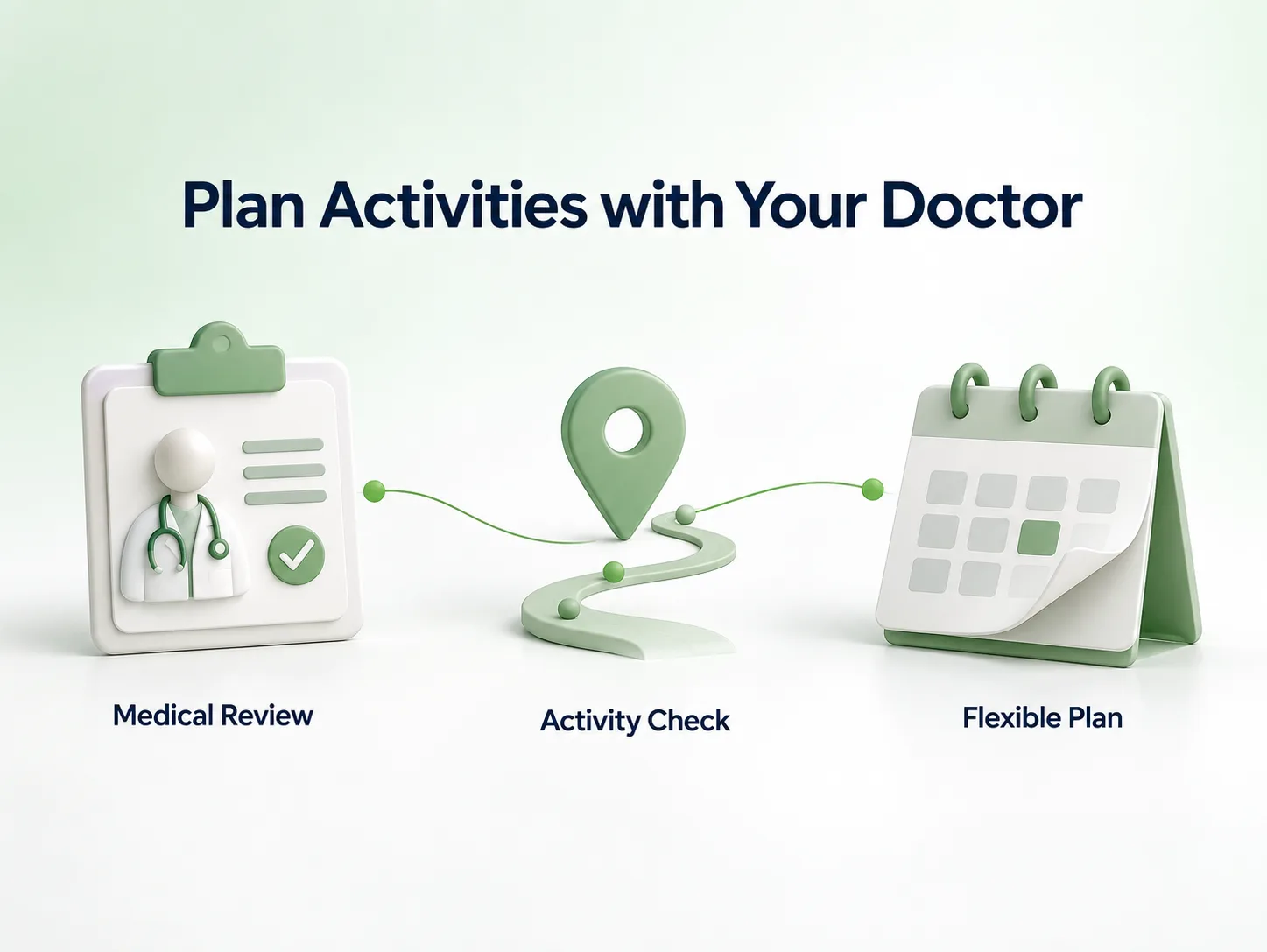
When asking your clinician about local travel, describe the practical details:
| Proposed activity | Detail to check |
|---|---|
| Restaurant visit | Transport, seating and dietary instructions |
| Short city outing | Walking distance, steps and places to rest |
| Visit to an attraction | Queues, terrain and ability to leave early |
| Day trip outside the city | Total travel time and access to care |
Ask whether you should remain close to the hospital until a particular review. Leave optional plans unbooked if that decision is still pending. Our guide on how to travel in China safely after medical treatment explains how to build a low-intensity itinerary.
Make Food Preferences Separate from Medical Instructions
Tell restaurants and accommodation providers what you prefer, but follow the treating team’s instructions if you have a prescribed diet.
“Less spicy” does not necessarily address an allergy, a food texture requirement or another clinical restriction. Explain the specific need and ask how it can be met.
For an allergy, carry an accurate written note. If you are unsure how to describe it in Chinese, ask for help with the translation before relying on it. Our guide on how to order food in China covers QR-code menus and explaining dietary restrictions.
Prepare Payment and Follow-Up Together
Ask which services are billed separately and whether repeat consultations or rehabilitation sessions are included in an estimate.
Confirm insurance coverage and authorization with your insurer rather than relying on a general statement that the provider accepts insurance. See medical costs in China for international patients for deposits and direct billing.
Before leaving Chengdu, collect relevant reports and ask who should provide follow-up at home. If remote contact is offered, clarify its purpose and limits.
For the return journey, use Before You Leave China: Medical Records, Medication & Follow-Up Care.
Show This to Your Medical Team
我想安排一次短途外出。请问根据我的恢复情况,步行、坐车和离开医院的时间有什么限制?
I would like to plan a short outing. Based on my recovery, what limits should I follow for walking, traveling by car and time away from the hospital?