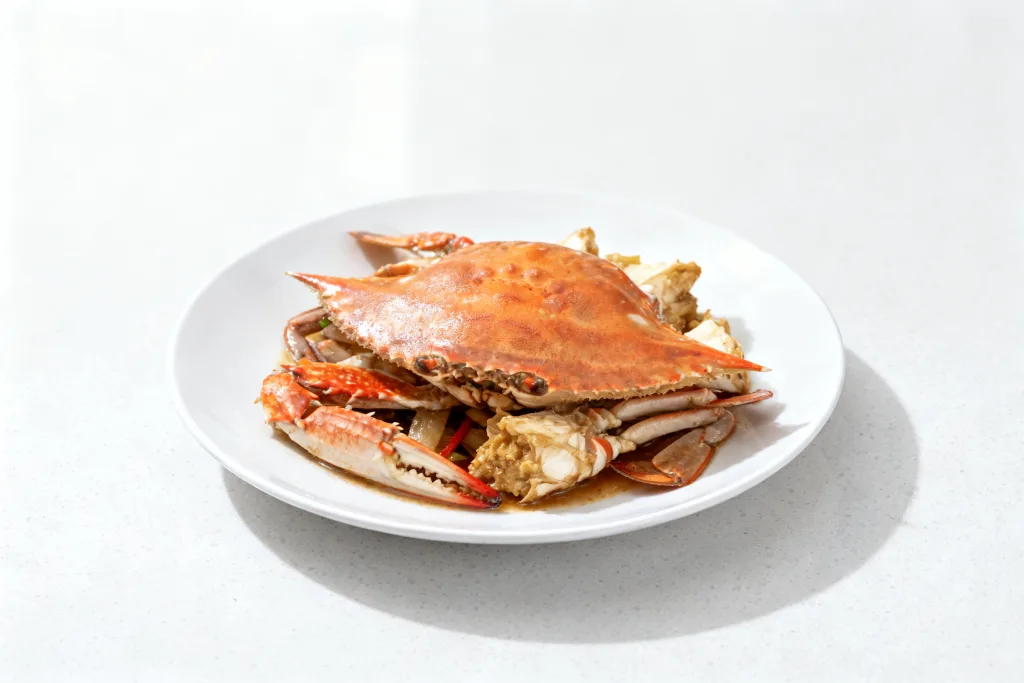
Zhoushan Swimming Crab
The blue swimming crab of the East China Sea, steamed whole or stir-fried with ginger and spring onion, cracked at the table and eaten from the shell with rice.
How to eat it
Turn the crab over, lift the triangular flap and pull off the top shell; the roe or orange fat sits inside and is scraped out with a chopstick. Discard the feathery grey gills along the body and break the body in half to reach the white meat in the chambers. Legs and claws are cracked with your teeth or with crab crackers if provided, and the meat is dipped in ginger vinegar. Expect it to be messy and slow; wet wipes will appear. Order one crab per person as a main, or share two among three with other dishes.
The story behind the dish
Swimming crab is the most valuable single fishery in Zhoushan, landed in vast quantities each autumn once the summer fishing moratorium lifts in September, which is why the season for fat, roe-filled crabs runs from then into the winter. Local fishermen grade them by weight and by whether the shell is hard, and a crab straight off the boat is usually cooked with nothing but steam, since anything more would hide the sweetness. Many families in the islands also keep live crabs in seawater for a day or two before cooking, which they say cleans the flesh.
For reference
Every kitchen does it its own way. What follows is the typical version — ingredients, heat and price shift from city to city and from one restaurant to the next, so take it as a guide rather than a fixed recipe.
If you have an allergy or something you can't eat, check with the staff before you order.