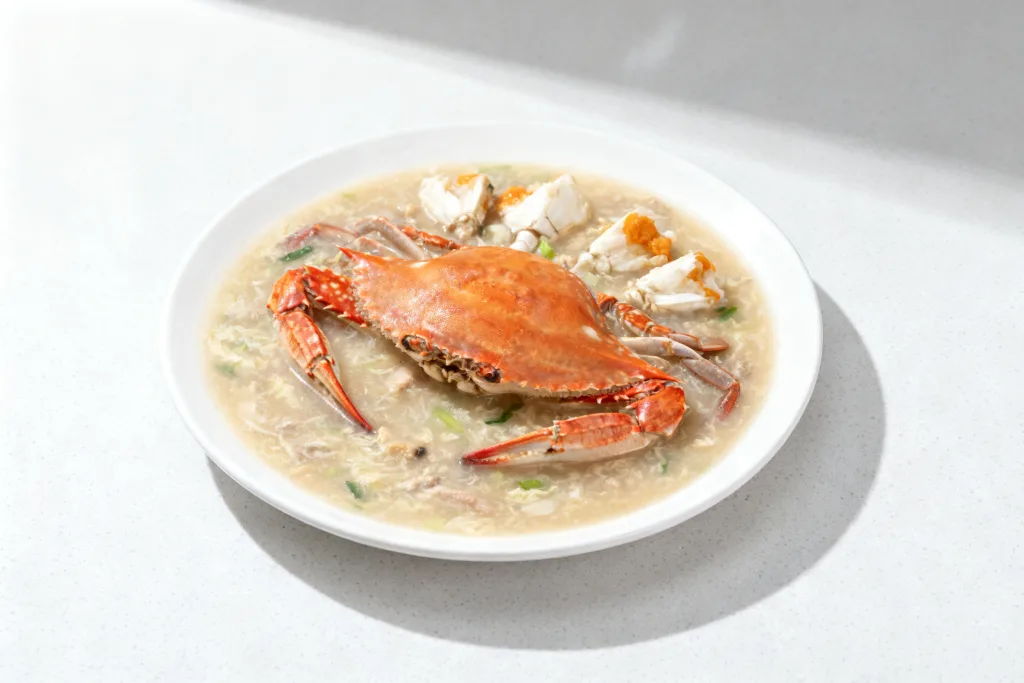
Zhoushan Raw Crab Paste
Raw swimming crab chopped fine, shell and all, and cured with salt, rice wine and ginger into a loose, briny paste that is eaten cold in small spoonfuls with plain congee or rice.
How to eat it
Take a small spoonful and put it on top of your rice or stir it into congee, then eat the rice; nobody eats the paste by itself. It contains fragments of shell, so chew carefully and expect some grit. The flavour is very salty and strongly of the sea, closer to a condiment than a dish, and it is meant to make a bowl of plain rice interesting rather than to be finished. Because the crab is raw, choose a busy shop with fresh stock and skip it altogether if you have a sensitive stomach or are pregnant.
The story behind the dish
Crab paste is a preservation food from the days before refrigeration, when the smallest crabs in a catch, too cheap to sell, were pounded and salted so they would keep through the humid summer. Every island household had its own jar and its own opinion on the salt ratio. It remains one of the defining tastes of Zhoushan home cooking, eaten at breakfast with rice porridge and sent to relatives who have moved to the mainland as a taste of home. Outsiders often find the first mouthful shocking, and even Ningbo and Shanghai cooks make milder versions of the same thing.
For reference
Every kitchen does it its own way. What follows is the typical version — ingredients, heat and price shift from city to city and from one restaurant to the next, so take it as a guide rather than a fixed recipe.
If you have an allergy or something you can't eat, check with the staff before you order.