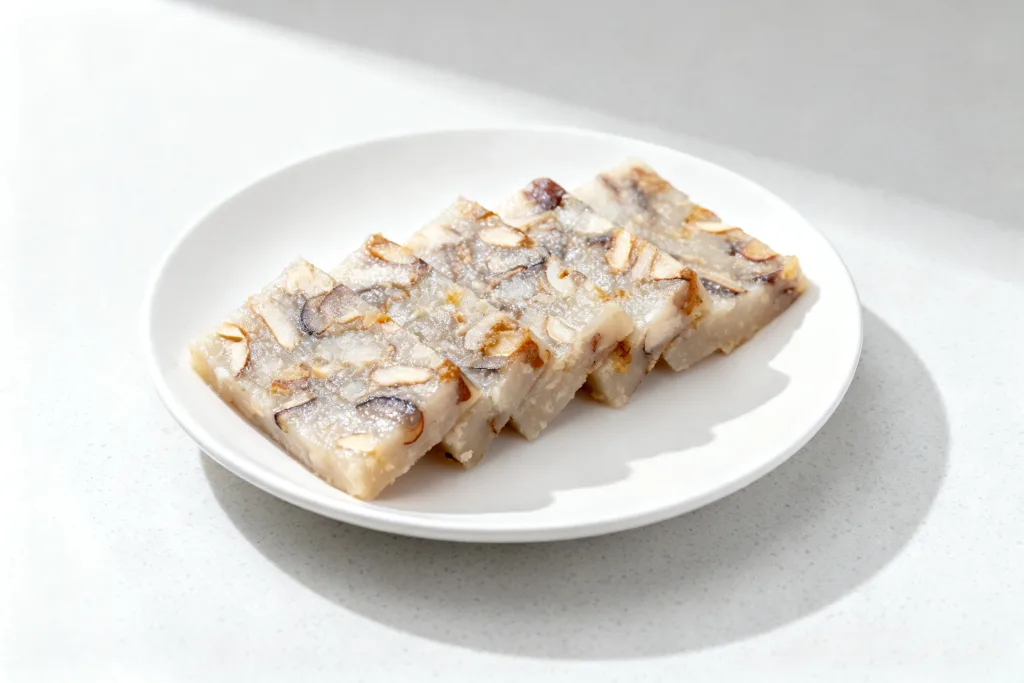
Zhoushan Hard Rice Cake
A dense, dry pressed cake of rice flour and sugar, cut into thin slabs that keep for months, originally a sailors' ration and now eaten as a sweet snack with tea.
How to eat it
Break a slab into pieces with your fingers; it snaps like a biscuit and is hard enough to be a surprise on the first bite, so nibble the edge rather than biting through the middle. Locals eat it with hot tea, which softens each mouthful, or dip it briefly into the tea first. It is very dry and quite filling for its size, so one or two slabs are enough. Keep the pack sealed and it stays good for weeks, which makes it one of the few Zhoushan foods that travels well in a suitcase.
The story behind the dish
Hard cake is a food of necessity rather than pleasure in origin. Fishing crews leaving the islands for weeks at sea needed something that would not rot in the salt air and would not crumble in a swaying boat, and pressed rice flour sweetened with sugar and baked dry answered both problems. Families also packed it for relatives working away, and its long keeping made it a customary gift at festivals. Modern versions are thinner and sweeter than the old ships' ration and are sold mostly as a souvenir, but older islanders still keep a tin at home for visitors.
For reference
Every kitchen does it its own way. What follows is the typical version — ingredients, heat and price shift from city to city and from one restaurant to the next, so take it as a guide rather than a fixed recipe.