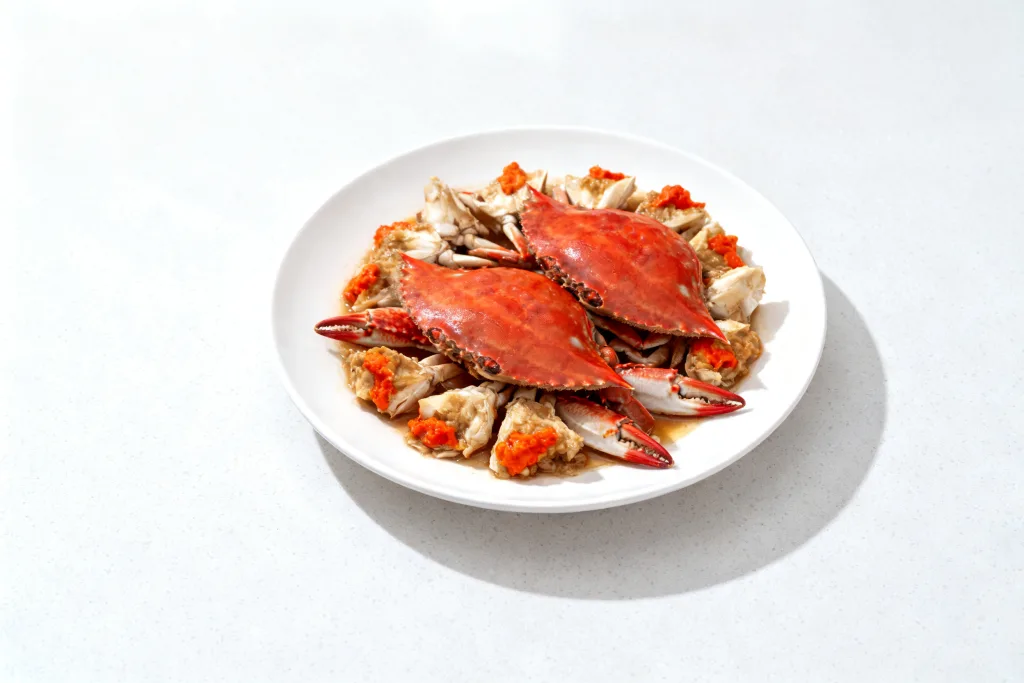
Red-Roe Brined Raw Crab
A female swimming crab full of red roe, soaked raw in strong salt brine for a day or two, then chilled and chopped into pieces that are eaten cold with rice or congee.
How to eat it
The crab arrives cut into pieces with the shell on and the roe showing as a firm orange-red layer. Pick up a piece, suck the translucent raw flesh from the shell and use a chopstick to scrape out the roe, which is the prize; the flesh is jelly-like rather than flaky and dissolves in the mouth. Dip in ginger vinegar if it is offered. Because it is very salty, eat it in small amounts with plenty of plain rice or congee. It is raw seafood, so choose a busy restaurant with live crabs and skip it if pregnant or during the hot summer months.
The story behind the dish
Brining crab raw is an old Ningbo and Zhoushan technique for preserving the autumn glut of roe-heavy females, when there were far more crabs than could be eaten fresh. Salt firms the roe and turns the raw flesh translucent, and a well-made crab sits in the brine for exactly the right number of hours; too short and it is bland, too long and it is inedible. It is the centrepiece cold dish at island weddings and New Year dinners, where the deep red of the roe is considered auspicious, and locals judge a household's cooking partly by the quality of its brined crab.
For reference
Every kitchen does it its own way. What follows is the typical version — ingredients, heat and price shift from city to city and from one restaurant to the next, so take it as a guide rather than a fixed recipe.
If you have an allergy or something you can't eat, check with the staff before you order.