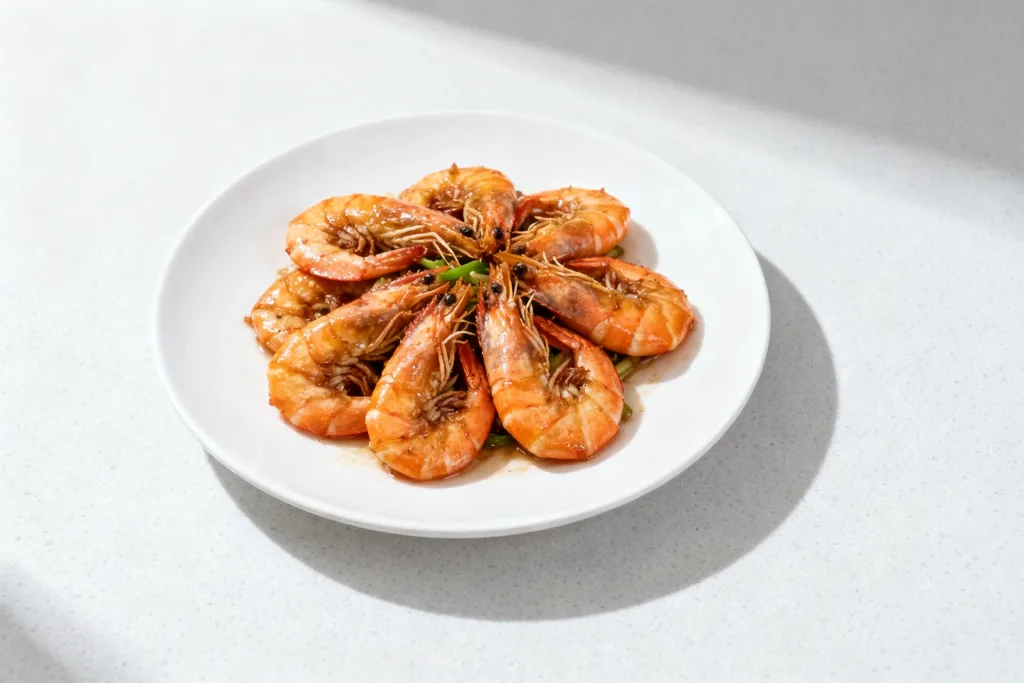
Oil-Blasted Prawns
Whole freshwater prawns flash-fried in very hot oil so the shells blister and turn crisp, then tossed in a sweet soy and vinegar glaze and eaten shell and all.
How to eat it
The prawns are served whole, heads and shells on, coated in a sticky glaze. The shells are fried until thin and brittle and are meant to be eaten; bite the prawn in two or three pieces and chew the shell along with the meat. Suck the head for the richest flavour, or leave it if you prefer. Use chopsticks rather than fingers, as the glaze is sticky. Have rice alongside. Locals eat the whole thing, so a pile of shells on your side plate marks you as a visitor.
The story behind the dish
Small freshwater prawns from the lake and the rivers around Hangzhou have been part of local cooking for centuries, and frying them whole at high heat is the simplest way to deal with shells too thin to be worth peeling. The dish belongs to a wider Jiangsu and Zhejiang style of sweet soy-glazed shellfish, and it became a fixed item on Hangzhou restaurant menus in the twentieth century, when the city's cuisine was set down as a distinct school. It is a dish that shows off the quality of the prawns rather than the skill of the cook, which is why locals judge it on freshness first.
For reference
Every kitchen does it its own way. What follows is the typical version — ingredients, heat and price shift from city to city and from one restaurant to the next, so take it as a guide rather than a fixed recipe.
If you have an allergy or something you can't eat, check with the staff before you order.