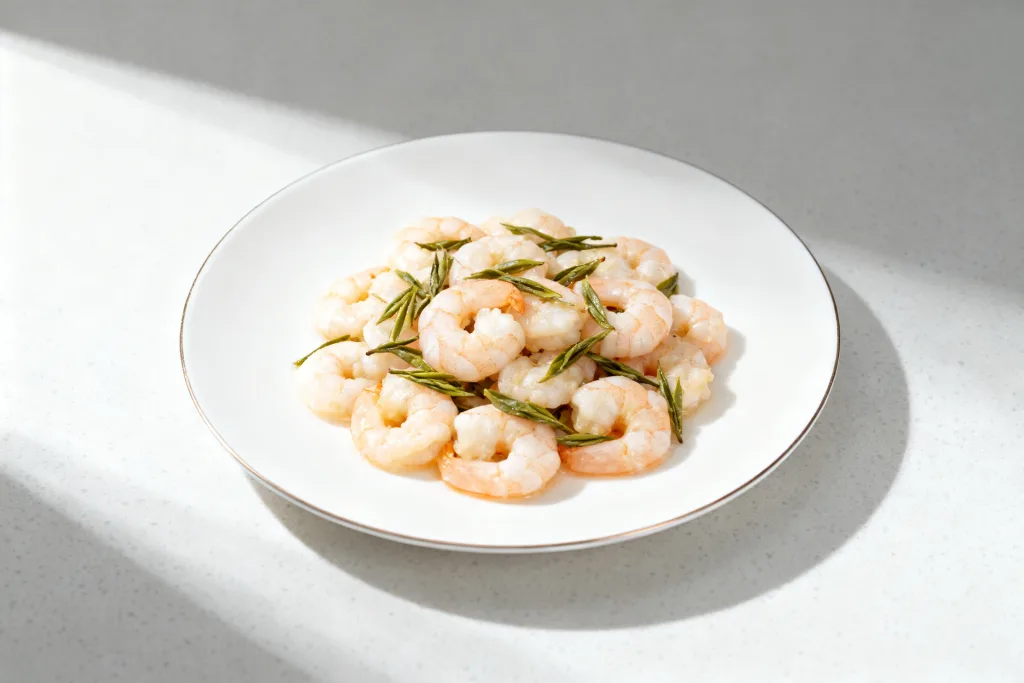
Longjing Tea Shrimp
Peeled freshwater shrimp marinated in egg white, stir-fried quickly and finished with freshly brewed Longjing green tea leaves, giving a pale, delicate dish with a faint tea aroma.
How to eat it
Pick up the shrimp with chopsticks and eat them as they are; there is no sauce and no dipping. The tea leaves scattered through the dish are meant to be eaten too, and they are soft enough to chew. The flavour is subtle, so eat it early in the meal before stronger dishes dull your palate, and do not pour soy sauce over it. Portions are small by design. It goes with plain rice or, more traditionally, with a cup of the same tea served alongside.
The story behind the dish
Longjing tea is grown on the hills immediately west of the lake, and combining the spring harvest with the small shrimp from local waters is the sort of pairing Hangzhou cooks like to claim as ancient. A popular tale has the Qianlong Emperor, disguised as a commoner, visiting a tea house with tea leaves in his sleeve and a flustered cook tipping them into a shrimp dish by mistake. That story is folklore. The dish as known today appears to date from the restaurant kitchens of the early twentieth century, and it became one of the city's signature plates after 1949, when Hangzhou cuisine was codified for state banquets.
For reference
Every kitchen does it its own way. What follows is the typical version — ingredients, heat and price shift from city to city and from one restaurant to the next, so take it as a guide rather than a fixed recipe.
If you have an allergy or something you can't eat, check with the staff before you order.