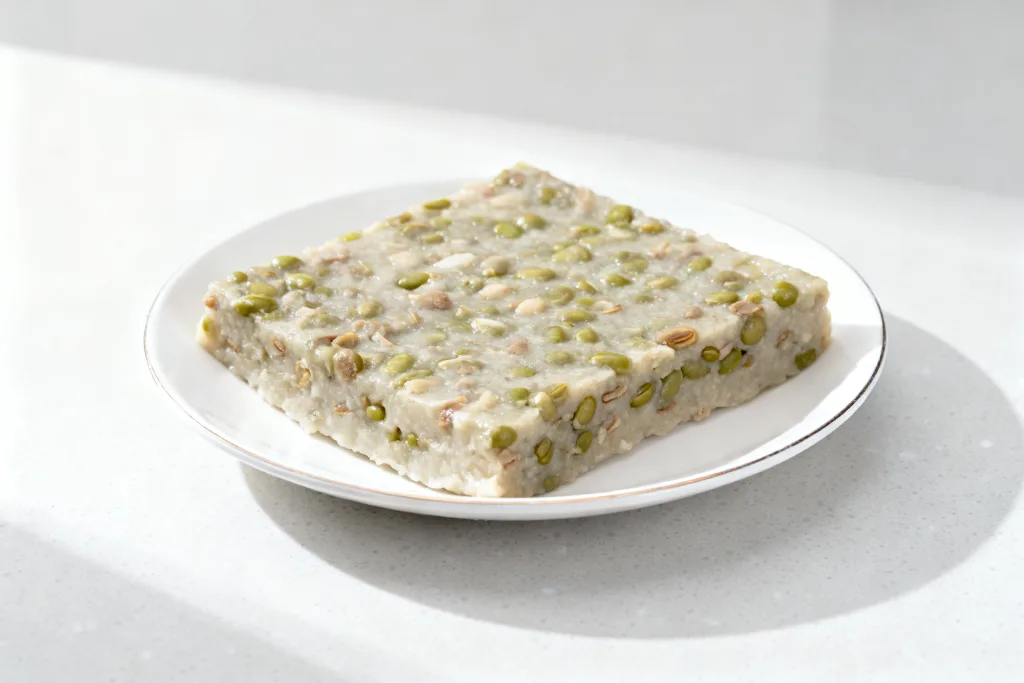
Linhai Bean Paste Cake (Bian Dou Ren Gao)
A pale, crumbly pressed cake of hulled hyacinth beans steamed, mashed and sweetened, cut into small blocks and eaten cold as a tea snack or a gift from Linhai.
How to eat it
Pick up a block with your fingers and eat it in small bites; it is dry and crumbles, so hold a hand or napkin underneath. Have tea alongside, since the cake is dense and the paste sticks to the roof of the mouth without a drink. It tastes best cool rather than chilled, so let a box from the fridge sit for a few minutes. Fresh batches are soft and fragrant; older ones turn hard, which is the main thing to check before buying a box as a gift.
The story behind the dish
Hyacinth bean, a flat white bean grown on trellises around Zhejiang farmhouses, is the base of this cake, which belongs to the family of pressed bean sweets found across the lower Yangtze region alongside the better-known mung bean cake. In Linhai it is made by soaking and hulling the beans, steaming them soft, mashing the paste with sugar and pressing it into wooden moulds that stamp a pattern on top. Little is written about its origins; it is simply one of the sweets that old-town pastry shops have always made, sold in the same boxes as other local cakes and bought as gifts for relatives, especially around Mid-Autumn Festival when the bean harvest comes in.
For reference
Every kitchen does it its own way. What follows is the typical version — ingredients, heat and price shift from city to city and from one restaurant to the next, so take it as a guide rather than a fixed recipe.