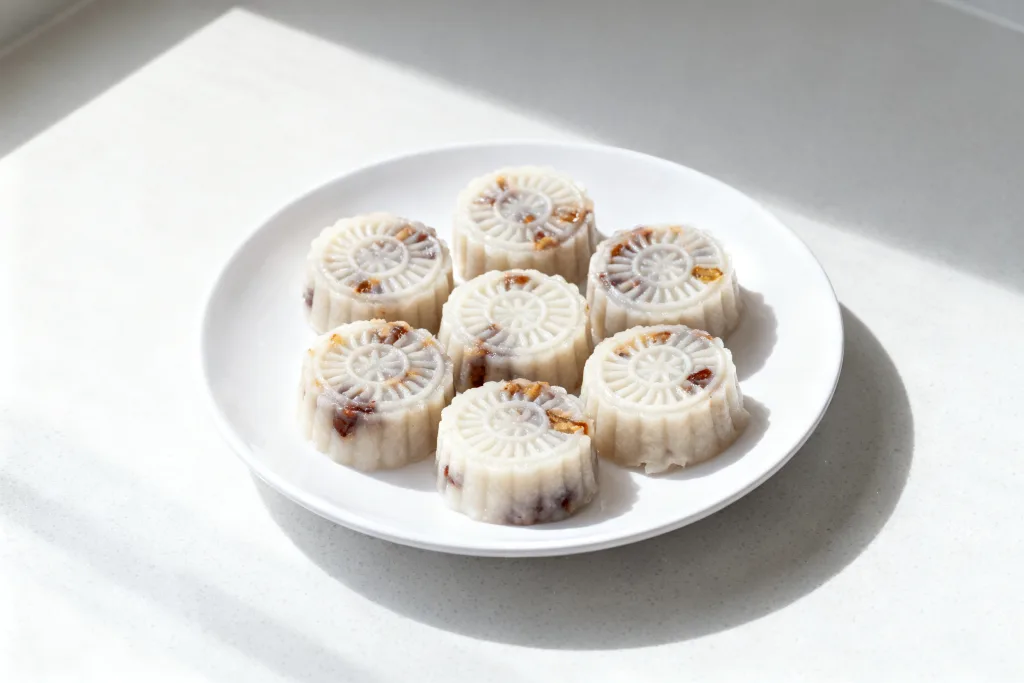
Dingsheng Cake (Victory Rice Cake)
A steamed rice-flour cake tinted pink, pressed into a mould shaped like a silver ingot or a flower, with a centre of sweet red bean paste, eaten warm as a snack.
How to eat it
Take it from the vendor in its paper wrapper and eat it straight away while the rice flour is still soft; once cold it becomes dry and crumbly. Hold it by the wrapper and bite from one end. The texture is loose and powdery rather than chewy, which surprises people expecting a mochi-like cake. There is nothing to dip. It pairs naturally with a bowl of lotus root starch or a cup of tea from a nearby stall. Boxed versions are sold as gifts but do not travel well.
The story behind the dish
Folklore ties the cake to the Southern Song dynasty, when Hangzhou was the capital and at war with the Jin. In the best-known version, townspeople pressed cakes into the shape of ingots and sent them to the troops of the general Han Shizhong, or in other tellings Yue Fei, as a wish for victory, and the name "settled victory cake" stuck. The story is legend and the dates do not stand up to scrutiny, but the cake's role as a good-luck food is real. It is still given to students before examinations and sold at temple fairs and festivals.
For reference
Every kitchen does it its own way. What follows is the typical version — ingredients, heat and price shift from city to city and from one restaurant to the next, so take it as a guide rather than a fixed recipe.